以下内容为AI翻译:The following content is translated by AI.
The following is an English guide to bamboo rafting on the Nine-Bend Stream in Wuyi Mountain for your reference:
Ticket Purchase
Booking Channels: You can book bamboo raft tickets in advance through official channels such as the “Wuyi Mountain Cultural Tourism” WeChat official account and the official website of Wuyi Mountain Scenic Area.
Ticket Prices: A single bamboo raft ticket costs 130 yuan per person; a combination ticket of bamboo raft + 1-day scenic area shuttle bus costs 200 yuan per person; a combination ticket of bamboo raft + 2-day scenic area shuttle bus costs 215 yuan per person; and a combination ticket of bamboo raft + 3-day scenic area shuttle bus costs 225 yuan per person.
Booking Time: Tickets are usually released one week in advance under normal circumstances. It is recommended to book earlier during holidays. Bamboo raft tickets are particularly in high demand during the peak season (March to November), so you need to plan your itinerary and book tickets well in advance.
Preparations
Documents: Bring valid documents such as your ID card, which are required for ticket collection and boarding the raft.
Clothing: Choose light and breathable clothes in summer; in winter, prepare warm clothing such as thick cotton-padded jackets, scarves, and gloves. Regardless of the season, wear comfortable and non-slip shoes to facilitate walking on the bamboo raft.
Sun Protection Products: The sunlight on the Nine-Bend Stream is strong on sunny days, so bring sun protection items such as sunscreen, sunglasses, hats, or sun umbrellas.
Waterproof Equipment: Prepare a waterproof bag to store valuables like mobile phones and cameras to prevent damage from falling into the water.
Other Items: You can prepare some fish food to feed the small fish during the rafting trip for extra fun. If needed, bring a power bank to charge electronic devices at any time.
Transportation
Public Transport: You can take Bus No. 9 to Tianshangong Station, or take the scenic area shuttle bus from the South Entrance of the scenic area directly to Xingcun Wharf.
Self-Driving: For tourists driving by themselves, note that there is a certain distance between the end point and the starting wharf of the bamboo raft trip. After the trip, you need to return to the starting point to pick up your car, so plan the parking in advance.
Boarding Process
Arrival and Ticket Collection: Arrive at Xingcun Wharf about 1 hour in advance according to the reserved time, and exchange your QR code or ID card for a small ticket. Try to arrive on time as indicated on the ticket; you can be at most half an hour late, otherwise the ticket may become invalid.
Group Formation: After obtaining the small ticket, you need to form a group of 8 people. The staff will help coordinate the group formation, and you can set off once the group of 8 is formed.
Raft Arrangement: The 8 people walk to the wharf together and board the bamboo raft in an orderly manner under the staff’s guidance.
Rafting Process
Guided Service: You can discuss with other tourists on the raft whether you need a guided service. If yes, each person pays 20 yuan to the raft operator, who will explain the legendary stories and scenic features along the way during the rafting.
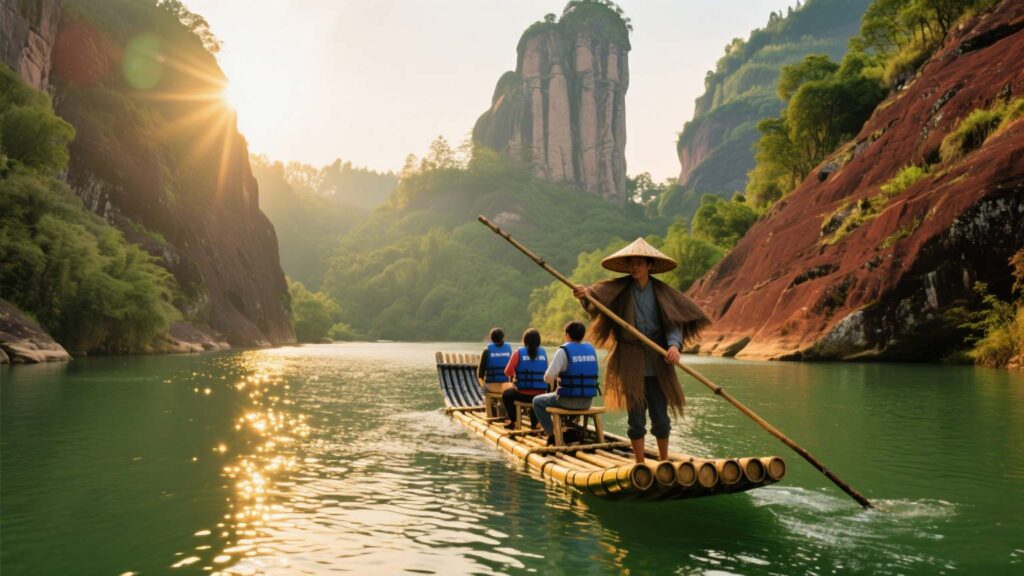
Sightseeing: The whole journey of the Nine-Bend Stream is about 9.5 kilometers, and the rafting takes approximately 1.5 to 2 hours. Along the way, you will pass through the “Nine Bends and Eighteen Turns”, and each bend has unique scenery, such as Yunu Peak (Jade Lady Peak), Shangxia Shui Gui (Upper and Lower Water Turtles), and Xiangbi Yan (Elephant Trunk Rock). You can ask the raft operator to row slower at some key scenic spots to facilitate taking photos as souvenirs.
Photography Tips: Wearing Hanfu (traditional Chinese clothing) or bright-colored clothes will make your photos more impressive. Both the bow and stern of the raft are excellent shooting spots. Remember to capture the dynamic moments when the bamboo raft glides across the clear water, and you can also take panoramic and close-up photos of the landscape to keep the beautiful memories.
Safety Precautions: After boarding the raft, follow the staff’s instructions and wear a life jacket. Do not walk around or shake the raft randomly during the rafting. Keep your personal belongings safe to avoid them falling into the water.
After Rafting
Disembarkation Point: The end point of the bamboo rafting is usually near Wuyi Palace. Next to the disembarkation point is Song Street, where you can start visiting other scenic spots, such as Wuyi Palace and Wanchun Garden.
Dining and Rest: After going ashore, you can go to the nearby farm restaurants to taste local delicacies, such as Wuyi Smoked Goose Noodles and Dahongpao Tea Eggs. You can also find a teahouse, sit down, and enjoy a cup of Dahongpao tea to relax.